
Hands-On Training and Workshops
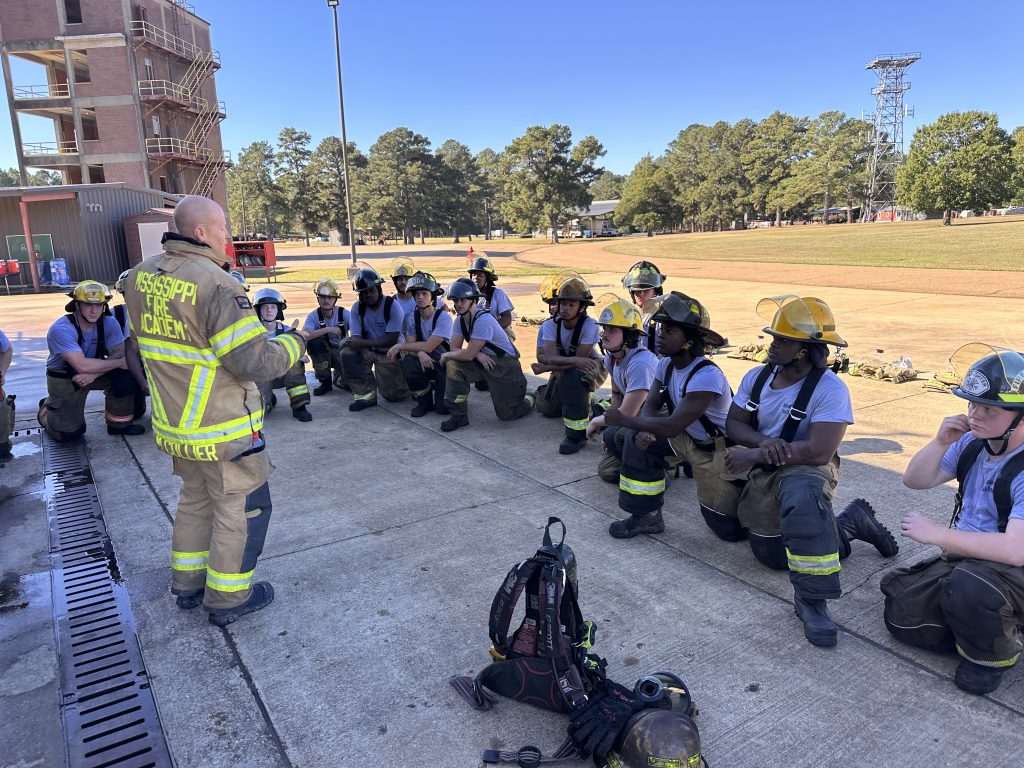
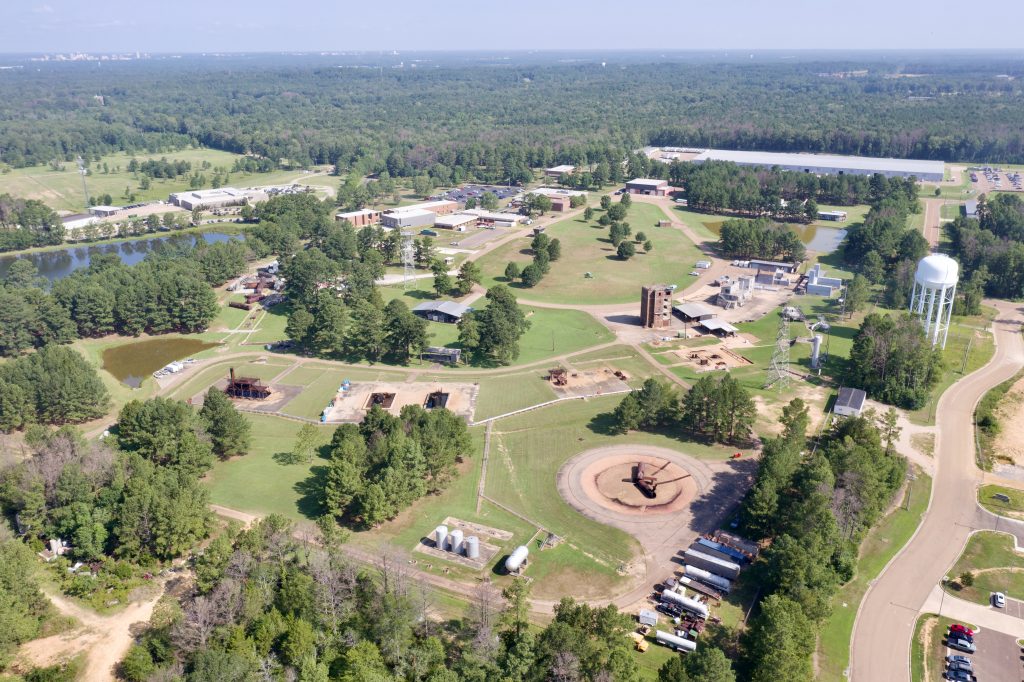
The Hands-On Training & Workshops series delivers structured, skill-focused instruction for firefighters seeking in-depth, practical training. These sessions require advance registration and have limited enrollment to ensure a safe, effective learning environment. Courses may include prerequisites and will typically require participants to bring personal protective equipment (PPE) or specified rescue equipment, depending on the topic. Instruction is led by qualified instructors and emphasizes realistic scenarios, repetition, and applied skills. Only those who preregister and meet course requirements will be permitted to attend, ensuring a high-quality training experience aligned with operational standards and best practices at the Mississippi State Fire Academy.
Thursday, February 26, 2026
Roadside Rope Rescue
8 Hours | Thursday
Maximum Enrollment: 16 students
Prerequisites: None
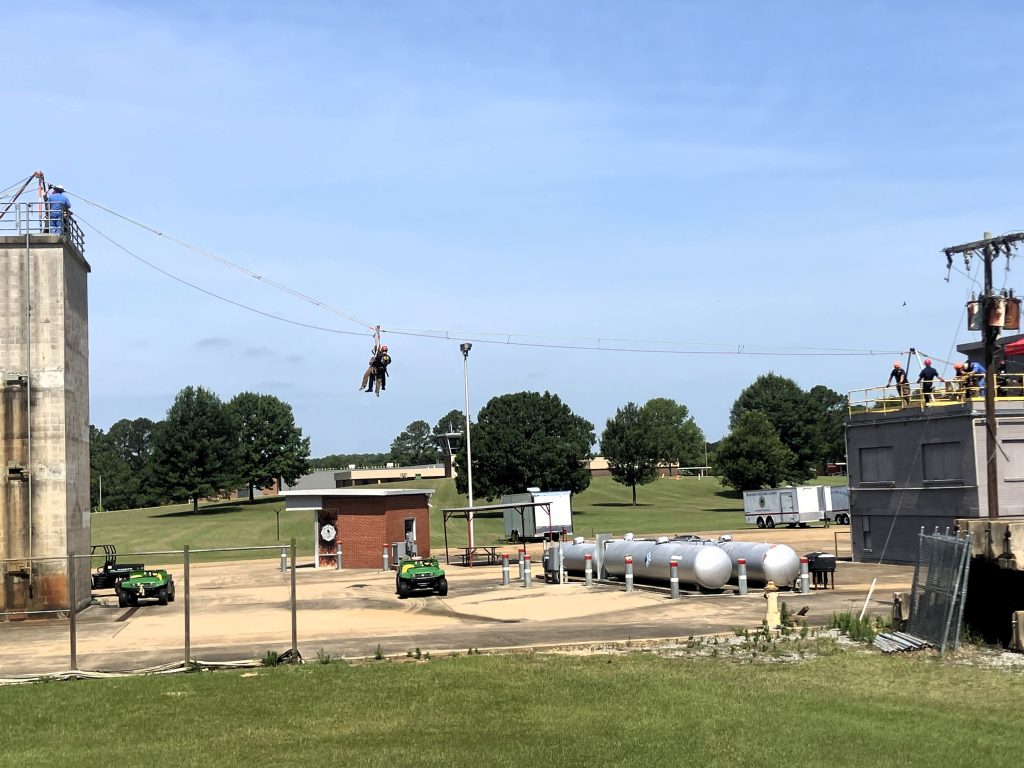
This 8-hour course introduces firefighters to the fundamentals of roadside rope rescue operations. The first half of the course focuses on classroom-based instruction covering knot systems, mechanical advantage principles, and patient packaging considerations commonly encountered in roadway incidents. The second half transitions to hands-on skill development, allowing students to apply concepts through practical drills and rescue scenarios. Emphasis is placed on safe operations, teamwork, and building foundational rope skills applicable to roadside and limited-access environments.
BLS/Stop the Bleed
Thursday AM
Max Enrollment: 20
Prerequisites: none
Instructor: Lee
BLS: The American Heart Association’s BLS course trains participants to promptly recognize several life-threatening emergencies, give high-quality chest compressions, deliver appropriate ventilations, and provide early use of an AED. BLS is geared towards prehospital providers, including EMTs, paramedics, firefighters, and in-facility hospital providers.
Stop the Bleed: Training designed to empower bystanders to become immediate responders, teaching them to identify and treat life-threatening bleeding using three core techniques: direct pressure, wound packing, and tourniquet application. It is designed for the general public to bridge the gap between injury and professional medical help.
Calling the Mayday
8 Hours | Thursday
Maximum Enrollment: 20 students
Prerequisites: None
Instructor: Bryan Brown | MSFA Adjunct Instructor
The 8-hour course on calling the Mayday focuses on essential skills for firefighters. It is designed to enhance understanding of when and how to call a Mayday during emergencies, ensuring that firefighters can effectively communicate their situation when in distress.
Course Content
- Decision Parameters: Understanding the criteria for calling a Mayday, including scenarios like being trapped or disoriented.
- Communication Skills: Training on how to relay critical information using the Who, What, Where, and Air format.
- Practical Drills: Engaging in hands-on training to practice calling a Mayday under simulated emergency conditions.
- Review and Feedback: Opportunities for participants to critique and improve their Mayday calls through peer and instructor feedback.
This course is vital for both career and volunteer firefighters to ensure safety and preparedness in emergency situations.
Friday, February 27, 2026
Structural Fire Search and Rescue – Tactical Foundation
8 Hours
Maximum Enrollment: 20 students
Prerequisites: Mississippi Certified Volunteer Firefighter or Firefighter I/II (NFPA 1001)
The Structural Fire Search and Rescue Tactical Foundation course provides firefighters with a comprehensive introduction to search and rescue operations in structural fire environments. This course combines classroom instruction with structured hands-on training to reinforce search theory, victim survivability concepts, and decision-making under fireground conditions. Practical evolutions emphasize techniques and skills commonly associated with truck company operations, including primary search methods, ground ladder deployment, access and egress, and coordinated rescue operations. The course is designed to build a strong operational foundation that improves effectiveness, safety, and confidence during structural fire search and rescue incidents.
Forcible Entry Workshop
8 Hours
Maximum Enrollment: 20 students
Prerequisites: None
The Forcible Entry Workshop provides firefighters with essential knowledge and practical skills required to gain access during emergency operations. This 8-hour course combines classroom instruction with hands-on training to cover the principles, tools, and techniques of conventional forcible entry. Students will learn size-up considerations, door and lock construction, tool selection, and proper technique to achieve efficient and controlled entry. In addition to core methods, the course includes demonstrations of alternative forcible entry techniques, allowing participants to broaden their understanding of available options on the fireground while emphasizing safety, efficiency, and damage control.
Problem Solved: Vehicle Fire Origin & Cause
4 Hours | Friday (8:00am – Noon)
Maximum Enrollment: 20 students
Prerequisites: None
Instructor: Greg Jackson | Cleveland Fire Department
This 4-hour vehicle fire investigation course covers the fundamentals of identifying the origin and cause of fires in cars, trucks, and other motor vehicles. Key topics covered within this course will be:
- Origin and Cause Determination: Applying the scientific method to locate where the fire started and what ignited it.
- Fire Pattern Analysis: Identifying burn patterns specific to vehicle structures.
- Vehicle Systems & Fuel Packages: Understanding engine compartments, fuel, exhaust, and electrical systems.
- Evidence Collection & Safety: Protocols for handling hazardous materials, such as electric/hybrid vehicle high-voltage batteries.
Railroad Incident Response Training – Awareness Level (Friday Morning)
4 Hours
Maximum Enrollment: 20 students
Prerequisites: None
This 4-hour awareness-level course provides first responders with a foundational understanding of railroad operations and hazardous materials encountered in the rail environment. Through classroom instruction and guided hands-on observation, students will learn rail safety principles, common rail hazmat hazards, tank car and locomotive anatomy, placards and markings, and basic emergency response considerations. Emphasis is placed on hazard recognition, scene safety, isolation and protective actions, and understanding the capabilities and limitations of awareness-level responders. This course is designed for firefighters, law enforcement, EMS, emergency managers, and others seeking an introduction to rail hazmat incidents.
CO2 Pipeline Emergency Training (Friday Afternoon)
4 Hours
Maximum Enrollment: 20
Prerequisites: None
The CO2 Pipeline Emergency Response Training at the Mississippi State Fire Academy provides firefighters, emergency responders, and public safety officials with the knowledge and skills to safely and effectively respond to incidents involving carbon dioxide pipelines. Participants will learn the unique hazards of CO2 in both gaseous and supercritical states, recognition of release indicators, scene size-up, air monitoring strategies, and tactical considerations for life safety, incident stabilization, and environmental protection.
This program emphasizes coordination with pipeline operators, the Incident Command System (ICS), and community emergency plans to ensure a unified and efficient response. Through classroom instruction, case studies, and scenario-based exercises, students will develop practical strategies for managing CO2 release incidents in both rural and urban environments.
This course is sponsored by a generous ExxonMobil Good Neighbor Grant, reflecting ExxonMobil’s commitment to enhancing community safety and supporting first responder readiness across Mississippi.
BLS/Stop the Bleed:
Friday AM
Max Enrollment: 20
Prerequisites: none
Instructor: Lee
BLS: The American Heart Association’s BLS course trains participants to promptly recognize several life-threatening emergencies, give high-quality chest compressions, deliver appropriate ventilations, and provide early use of an AED. BLS is geared towards prehospital providers, including EMTs, paramedics, firefighters, and in-facility hospital providers.
Stop the Bleed: Training designed to empower bystanders to become immediate responders, teaching them to identify and treat life-threatening bleeding using three core techniques: direct pressure, wound packing, and tourniquet application. It is designed for the general public to bridge the gap between injury and professional medical help.
Saturday, February 28, 2026
Advanced Confined Space Refresher
8 Hours | Saturday
Maximum Enrollment: 12 students
Prerequisites: Confined Space Rescue Technician and Rope Technician
This advanced refresher course is designed for experienced rescue technicians seeking to sharpen and validate confined space rescue skills. The course is heavily scenario-driven, emphasizing hands-on application rather than classroom instruction. Students will operate in realistic confined space environments, focusing on problem-solving, team coordination, and advanced rope and access techniques. This course reinforces best practices, operational efficiency, and safety standards for high-risk confined space rescue operations.
Fire Attack – Tactical Foundation
8 Hours
Maximum Enrollment: 20 students
Prerequisites: Mississippi Certified Volunteer Firefighter or Firefighter I/II (NFPA 1001)
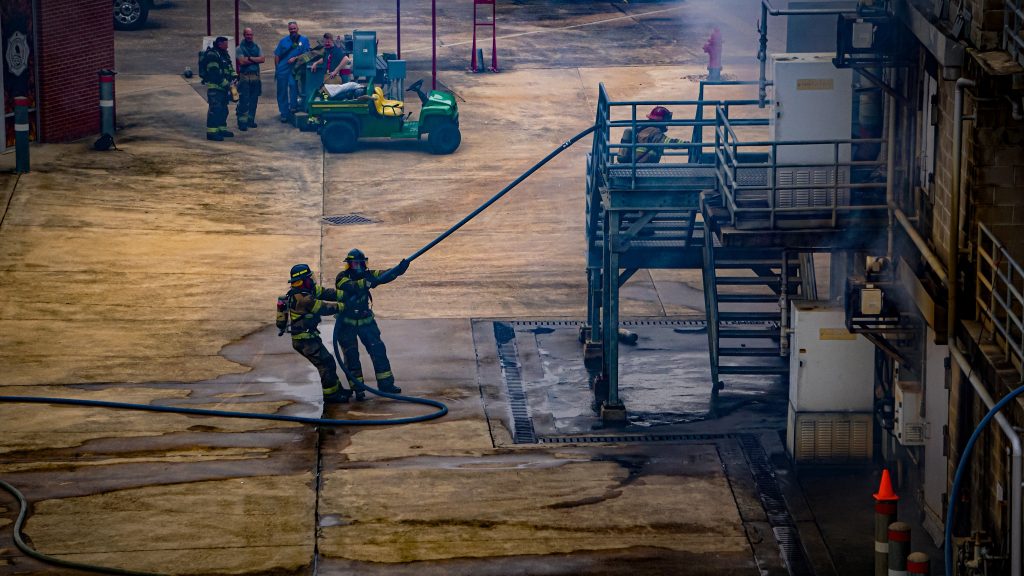
The Fire Attack Tactical Foundation course is designed to strengthen a firefighter’s understanding of core fire attack principles through a balanced combination of classroom instruction and hands-on training. The lecture portion covers foundational fire attack concepts, decision-making, and tactical considerations that influence effective engine company operations. Hands-on evolutions then reinforce these principles through practical skill development focused on hose deployment, nozzle management, water application, and coordinated fire attack operations. This course emphasizes operational fundamentals, situational awareness, and efficient engine company performance to improve effectiveness and safety on the fireground.
Forcible Entry Workshop
8 Hours
Maximum Enrollment: 20 students
Prerequisites: None
The Forcible Entry Workshop provides firefighters with essential knowledge and practical skills required to gain access during emergency operations. This 8-hour course combines classroom instruction with hands-on training to cover the principles, tools, and techniques of conventional forcible entry. Students will learn size-up considerations, door and lock construction, tool selection, and proper technique to achieve efficient and controlled entry. In addition to core methods, the course includes demonstrations of alternative forcible entry techniques, allowing participants to broaden their understanding of available options on the fireground while emphasizing safety, efficiency, and damage control.
CO2 Pipeline Emergency Training (Saturday Morning)
4 Hours
Maximum Enrollment: 20
Prerequisites: None
The CO2 Pipeline Emergency Response Training at the Mississippi State Fire Academy provides firefighters, emergency responders, and public safety officials with the knowledge and skills to safely and effectively respond to incidents involving carbon dioxide pipelines. Participants will learn the unique hazards of CO2 in both gaseous and supercritical states, recognition of release indicators, scene size-up, air monitoring strategies, and tactical considerations for life safety, incident stabilization, and environmental protection.
This program emphasizes coordination with pipeline operators, the Incident Command System (ICS), and community emergency plans to ensure a unified and efficient response. Through classroom instruction, case studies, and scenario-based exercises, students will develop practical strategies for managing CO2 release incidents in both rural and urban environments.
This course is sponsored by a generous ExxonMobil Good Neighbor Grant, reflecting ExxonMobil’s commitment to enhancing community safety and supporting first responder readiness across Mississippi.
Railroad Incident Response Training – Technician Level (Saturday Afternoon)
4 Hours
Maximum Enrollment: 20 students
Prerequisites: Hazardous Material Technician
This 4-hour technician-level course builds upon foundational rail hazmat knowledge and is intended for personnel trained to the Hazardous Materials Technician level. Students will receive in-depth instruction on railroad operations, tank car and locomotive anatomy, and advanced hazard control considerations, followed by hands-on field exercises focused on leak mitigation, emergency capping kits, and operational decision-making in rail incidents. The course emphasizes technician-level responsibilities including hazard assessment, tactical objectives, control zones, and coordination within the incident command system. This class is designed for hazmat team members and specialists who may be tasked with mitigating and controlling hazardous materials releases in the rail environment.
——–





Keynote and Lecture Series
The Keynote and Lecture Series is designed to provide accessible, high-value education for all attendees. These sessions will be held in the Auditorium at the Mississippi State Fire Academy and are free to attend with no registration required. The format is come-and-go, allowing firefighters to attend individual presentations based on interest and availability. A published schedule of speakers and topics will guide attendance, and sessions will focus on leadership, operational insights, industry trends, and professional development relevant to the modern fire service.
Thursday Lectures:
Railroad Emergencies and Unified Response: Bridging Public and Private Efforts
1.5 Hours | Thursday (1:00pm – 2:30pm)
Maximum Enrollment: Auditorium capacity
Prerequisites: None
Instructor: Greg Vaughan
This course provides an overview of emergency response considerations involving railroad incidents, with an emphasis on coordination between public safety agencies and private rail industry partners. Participants will gain insight into how rail systems operate, the roles and responsibilities of railroad personnel, and the importance of communication and unified command during incidents involving trains, hazardous materials, or infrastructure. The session highlights best practices for building relationships, improving situational awareness, and enhancing multi-agency coordination to support safe and effective response operations along rail corridors and in surrounding communities.
You said what? New Advances in Rural Emergency Care
1.5 Hours | Thursday (3:00pm – 4:30pm)
Maximum Enrollment: Auditorium capacity
Prerequisites: None
Instructor: Dr. Damon Darsey
“You Said What? New Advances in Rural Emergency Care” is an engaging and informative presentation that explores emerging trends, evolving practices, and recent advancements shaping emergency care in rural environments. Dr. Damon Darsey highlights the unique challenges faced by providers in resource-limited settings and discusses practical approaches, innovative solutions, and current developments that can improve patient outcomes. This session is designed to broaden perspectives, encourage critical thinking, and provide valuable insights applicable to a wide range of emergency response and healthcare professionals serving rural communities.
Friday Lectures
The One: Preparing for the Once-in-a-Career Incident
1.5 Hours | Friday (1:00pm – 2:30pm)
Maximum Enrollment: Auditorium capacity
Prerequisites: None
Instructor: Ben McMinn | Division Chief of Special Operations, Desoto County | Program Manager, Mississippi Task Force 1
This course focuses on preparing firefighters for the rare but defining large-scale incident many will encounter only once in their careers. Presented by Ben McMinn, a Mississippi Task Force 1 member with extensive disaster response experience, this session explores the challenges of responding to major events such as tornadoes, hurricanes, and widespread disasters. Participants will gain insight into operational coordination, resource management, and the realities of working within large, multi-agency responses. The course will also highlight Mississippi’s deployment capabilities, including an overview of systems such as SMAC and EMAC, and how local responders integrate into state and regional response efforts during major incidents.
Saturday Lectures
Shatter the Silence
4 Hours | Saturday (1:00pm – 5:00pm)
Maximum Enrollment: Auditorium capacity
Prerequisites: None
Instructor: LaBethani May, M.S. | MS Department of Mental Health | Division of Outreach and Training
The transition from childhood to adult life can be very challenging. Whether someone is facing difficulties in school, finding a job, maintaining positive relationships, or becoming financially independent, young people often face challenges they have to overcome and stay successful in as they move into adulthood. Unfortunately, too many adolescents and adults attempt suicide in the face of these challenges. Suicide is the 3rd leading cause of death among young people ages 10-24 in Mississippi.
Shatter the Silence is a campaign of the Mississippi Department of Mental Health to encourage young people to talk through their feelings with friends and trusted adults, and to also encourage those friends to show their concern and support. By working together, we can help those in need to realize it’s OK to reach out for help.